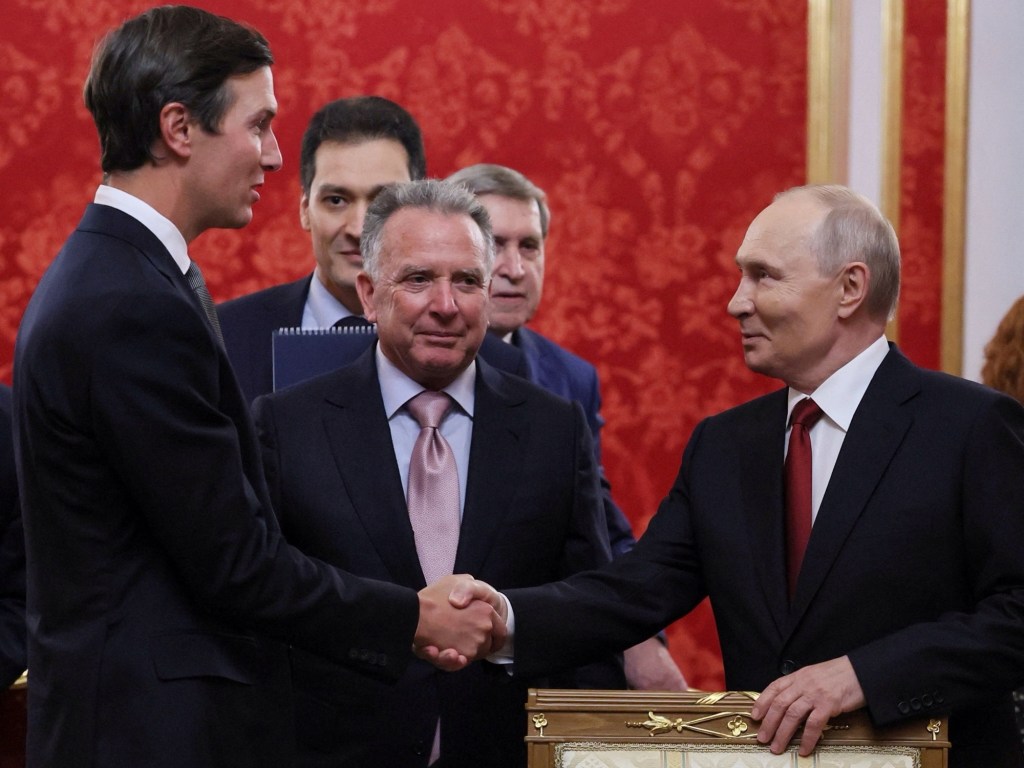
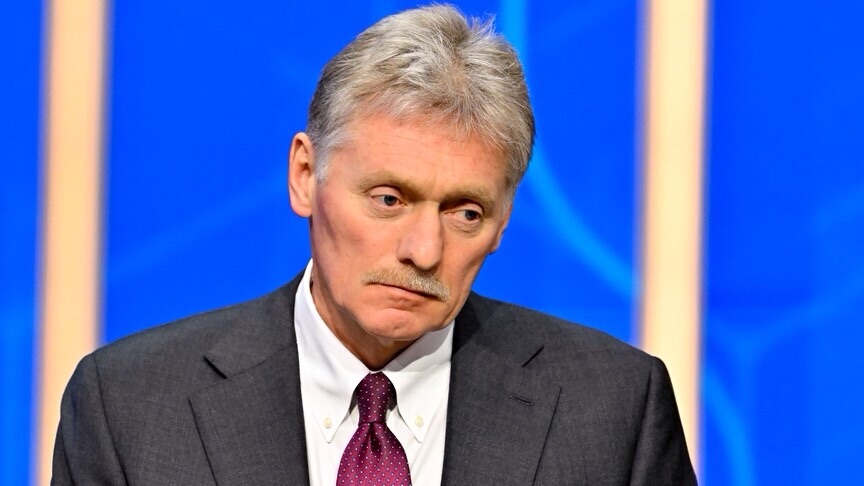
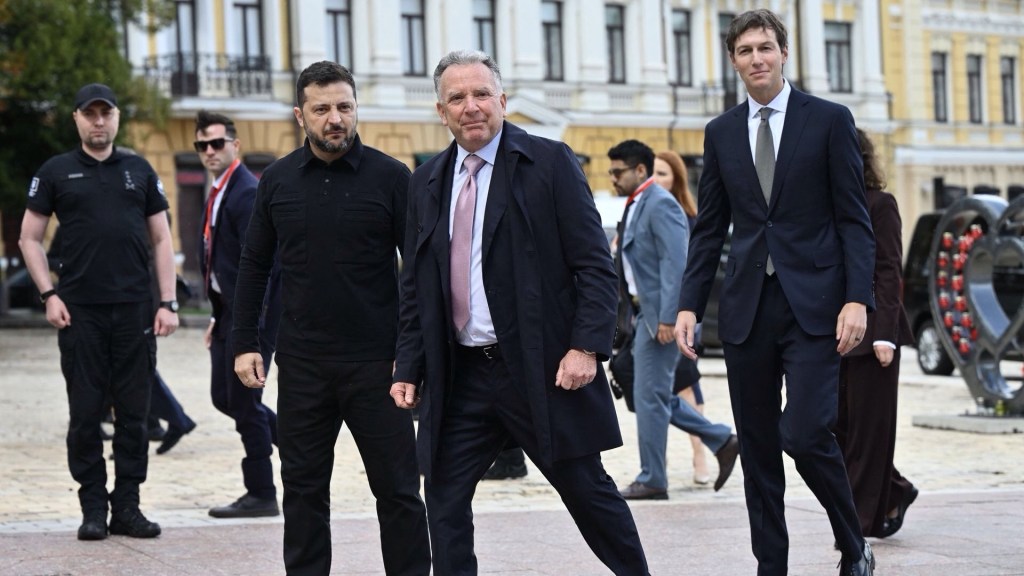
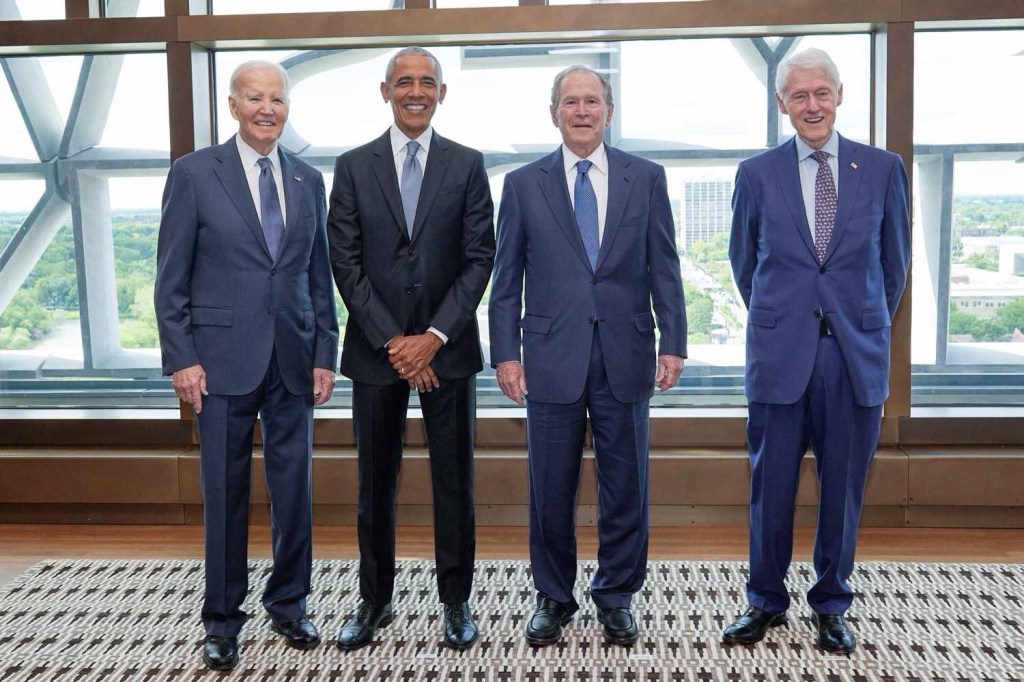
May 9th is celebrated in Russia as Victory Day — the anniversary of the defeat of Nazi Germany in World War II. And each year, an enormous parade is held in Moscow in which the latest and greatest examples of Russian military might are hauled out and paraded through Red Square .
Red Square – May 9, 2024
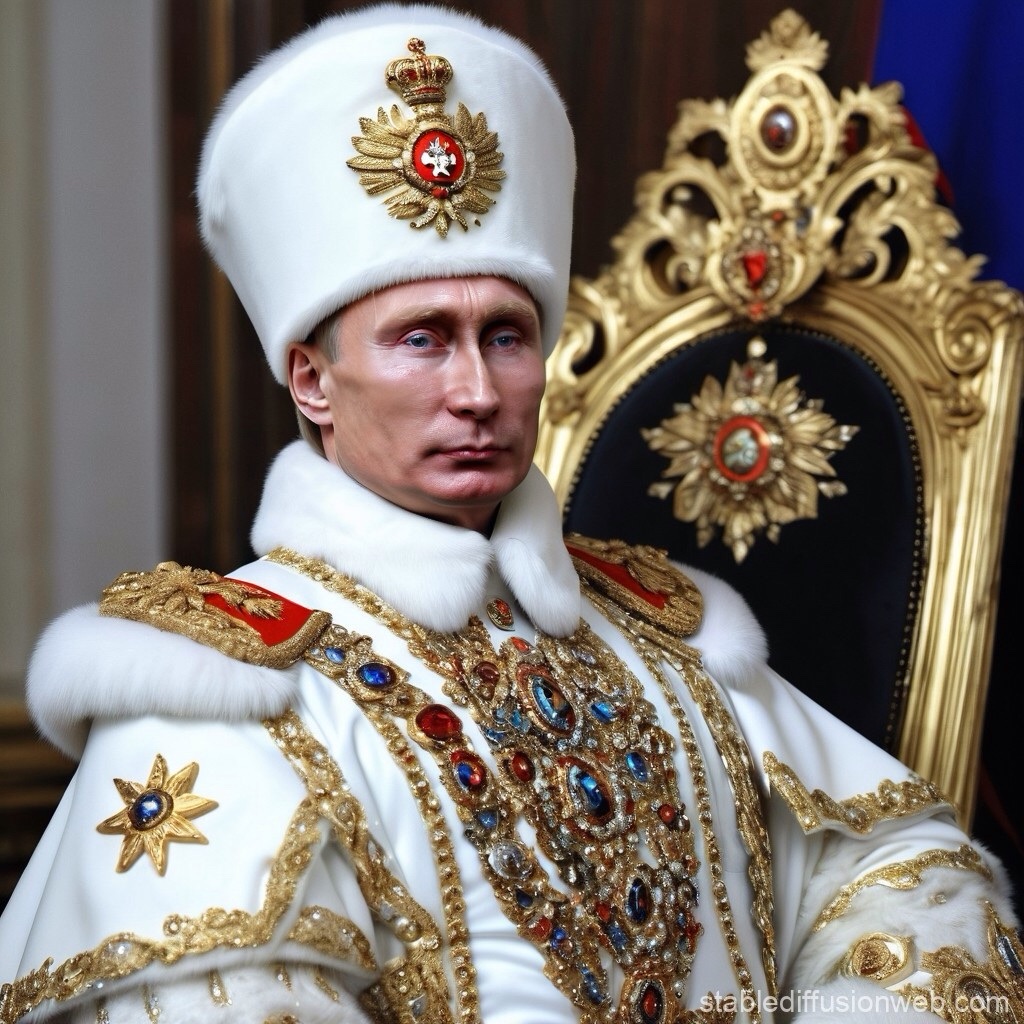
But this year, Vladimir Putin — who is rumored to be spending a great deal of time hiding out in bunkers in various undisclosed locations — is facing a dual dilemma: the physical danger of Ukraine’s increasing drone attacks, some of which have targeted the Moscow area; and the growing unpopularity among his own people of his war against Ukraine, causing unrest and concerns that a popular uprising may be in the offing.
An imminent coup or revolution may or may not be a reality; but there is no doubt that the drone attacks are very real. In fact, one struck a high-rise apartment building just six kilometers (about four miles) from the Kremlin on May 4th. No one was killed or seriously injured; but this was much too close for comfort.
Moscow Apartment Building Drone Strike – May 4, 2026
Putin had already made the decision to cut back on the size of this year’s military display. He also announced a two-day cease-fire with Ukraine to allow the May 9th parade to proceed in safety. That announcement — which, in an unusual circumstance, was issued by the Ministry of Defense — also carried with it a threat that a “massive retaliatory strike . . . [would be made] on the center of Kyiv” if the Red Square events were targeted. [RFE/RL, May 4, 2026.]
In response, Ukrainian President Volodymyr Zelensky announced his own ceasefire to begin earlier, at midnight on May 5th. He also took the opportunity to poke fun at Putin by posting on Telegram:
“It is time for Russian leaders to take real steps to end their war; since the Russian Defense Ministry believes that it can’t hold a parade in Moscow without Ukraine’s consent.” [Id.]
Ukrainian President Volodymyr Zelensky
Meanwhile, Russia — not wasting any of the hours before Ukraine’s declared May 5th ceasefire — struck numerous regions including Kramatorsk, Zaporizhzhia and Chernihiv on May 4th, killing at least 26 and injuring more than 80 others in drone and missile attacks. [Al Jazeera and Reuters, May 5, 2026.]
It is clear that, for Vladimir Putin, a “ceasefire” is merely a ploy to be utilized for his convenience, but to be ignored when it is requested for purposes of peace negotiations.
But that’s nothing we didn’t already know.
Hopefully — for the sake of the civilians who will be in attendance at the Red Square festivities — Ukraine’s and Russia’s leaders will do the honorable thing, and both sides will be able to enjoy a breather from the endless hostilities.
As to any long-term peace talks, they seem to have taken a back seat to Donald Trump’s Middle East fiasco . . . which has proven to be a total disaster on so many levels.
We were told that Donald Trump’s rationale for invading Iran was . . . well, a number of things, actually, depending on the day of the week and his mindset of the moment. But along with his imaginary need to destroy the nuclear capabilities he said he had already demolished months earlier, he claimed that he wanted to free the Iranian people from their autocratic, theocratic, tyrannical regime. So he had the long-time ruler, the Ayatollah Khamenei, killed, along with other leading members of the government. He also said that U.S. forces had totally wiped out Iran’s military — land, sea and air forces — so that they would never again be a threat to anyone.
But it didn’t exactly work out that way.
The Face of Iran Today
Almost immediately following the death of the Ayatollah, his son — even more rabidly tyrannical than his father — was installed as successor to the throne. The regime is intact, and it is angry. According to one citizen, who chose to remain anonymous for fear of retribution:
“Changed? It’s fallen into the hands of the Revolutionary Guards. The country is a mess. . . . So many of their people are still standing. What I had imagined did not come true. Everything got worse. And we are left with the Islamic Republic. I am gutted that they won this war.” [Fergal Keane, BBC, May 3, 2026.]
The late Ayatollah Ali Khamenei, with his son and heir, Mojtaba
Iran’s military, while no doubt severely damaged, is not — as Trump would have us believe — wiped out. They continue to attack U.S. forces and facilities near the Strait of Hormuz and in neighboring countries.
And organized pro-government displays are ubiquitous, while opposition rallies are banned and severely punished. BBC sources in Iran say there is fear that when the war is over, internal repression will once again escalate. A lawyer who works with detainees says:
“Before the war, harsh treatment was reserved for those who were leading the protests, who had Molotov cocktails, or who were armed. But during the war, that harshness has intensified significantly.” [Id.]
*. *. *
It’s as though the regime is sending Donald Trump a message: “Don’t tell us how to run our country!”
But Trump, as usual, has gone deaf, dumb and blind.
No, there hasn’t been a catastrophe in Rome. And certainly the Vatican, under the guidance of Pope Leo XIV, has been a model of peace and diplomacy. But U.S. Secretary of State Marco Rubio is heading for Rome this week, officially to “advance bilateral relations” with both the Italian government and the Holy See, which in Washington-speak roughly translates to “cleaning up another one of Donald Trump’s messes.”
[PBS Illustrations]
According to State Department spokesman Tommy Pigott, “Meetings with Italian counterparts will focus on shared security interests and strategic alignment.” [Alex Raufoglu, RFE/RL, May 4, 2026.]
And an anonymous former senior State Department official diplomatically said that:
“Secretary Rubio’s trip is an important step in diplomacy,” and that the trip is an indication of how much the Trump administration “values the relationship with Italy and the Holy See.” [Id.]
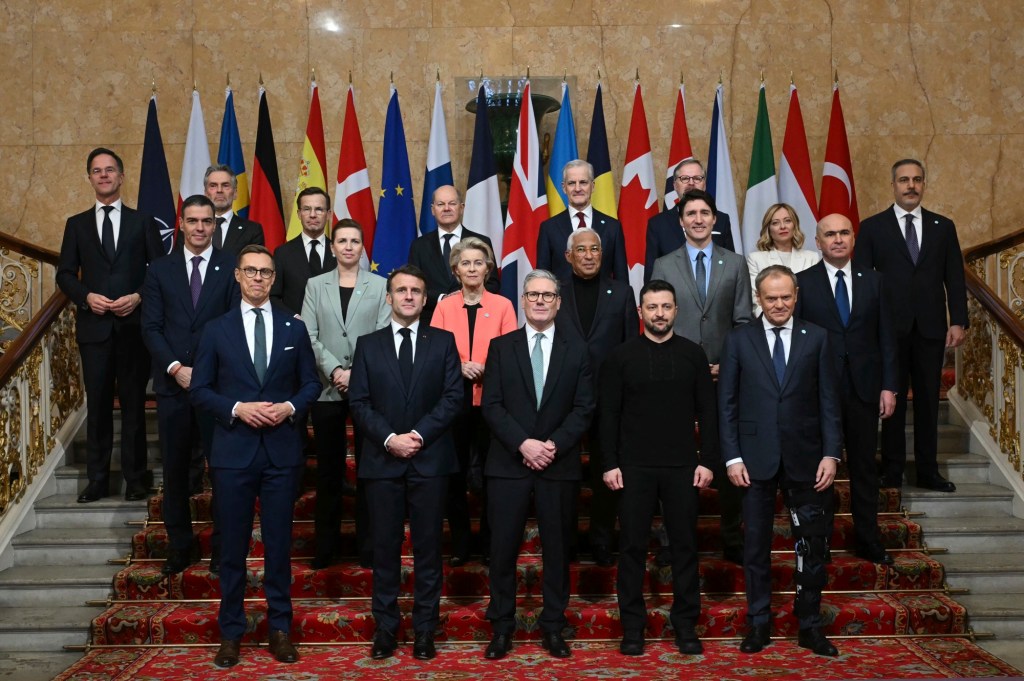
But here’s the thing: Would this trip be necessary if Trump hadn’t excoriated both Italian Prime Minister Giorgia Meloni and the Pope — not to mention other European leaders — for having had the courage of their convictions with regard to his invasion of Iran?
About the Pope’s anti-war stance, Trump wrote this demented screed on his Truth Social platform:
“Pope Leo is WEAK on Crime, and terrible for Foreign Policy. . . . I like his brother Louis much better than I like him, because Louis is all MAGA. He gets it, and Leo doesn’t! I don’t want a Pope who thinks it’s OK for Iran to have a Nuclear Weapon. I don’t want a Pope who thinks it’s terrible that America attacked Venezuela, a Country that was sending massive amounts of Drugs into the United States and, even worse, emptying their prisons, including murderers, drug dealers, and killers, into our Country. And I don’t want a Pope who criticizes the President of the United States because I’m doing exactly what I was elected, IN A LANDSLIDE, to do . . . Leo should be thankful because, as everyone knows, he was a shocking surprise. He wasn’t on any list to be Pope, and was only put there by the Church because he was an American, and they thought that would be the best way to deal with President Donald J. Trump. If I wasn’t in the White House, Leo wouldn’t be in the Vatican. . . . Leo should get his act together as Pope, use Common Sense, stop catering to the Radical Left, and focus on being a Great Pope, not a Politician. It’s hurting him very badly and, more importantly, it’s hurting the Catholic Church! President DONALD J. TRUMP”
Not only did Trump apparently forget how much he “valued those relationships”; he also seemed to overlook the fact that the Pope does not work for “President DONALD J. TRUMP,” but answers to a much higher Power.
Pope Leo XIV: A Man of Peace
Then, when Prime Minister Meloni had the audacity to voice her objection to Trump’s comments about the Pope, calling them “unacceptable” and refusing to back the U.S.-Israel war on Iran, he had this to say about her:
“I thought she had courage. I was wrong,” later adding that their bond had frayed because “She’s been negative. Anybody that turned us down to helping [sic] with this Iran situation, we do not have the same relationship.” [Colleen Barry, Associated Press, April 15, 2026.”
And in connection with his proposed withdrawal of troops from Germany and other European countries, when asked if he would consider pulling troops out of Italy and Spain — two countries also critical of the Iran war — he said:
“Probably . . . Look, why shouldn’t I? Italy has not been of any help to us and Spain has been horrible, absolutely horrible.” [Al Jazeera, May 1, 2026.]
Italian Prime Minister Giorgia Meloni
So now he is sending Marco Rubio overseas once again to do the dirty work of cleaning up the mess he made because he is incapable of thinking before he speaks, and because whatever thoughts he does have — on any subject — revolve solely around himself, and not around the job he is supposed to be doing as the titular leader of the free world.
Maybe it’s an omen: so many good things happening on this date in years past:
In 1776, Rhode Island became the first colony to renounce allegiance to George III.
On this 250th anniversary of that momentous occasion, perhaps we could take the hint and continue the “No Kings” trend.
King George III
In 1929, Audrey Hepburn was born.
She graced the world with her beauty, her strength (surviving World War II in Europe), her kindness, and her talent.
In 1948, Norman Mailer’s first novel, “The Naked and the Dead,” was published.
And the world discovered another great writer.
In 1956, Gene Vincent recorded “Be-Bop-A-Lula.”
Okay, so they weren’t all great. But sometimes just having fun is enough.
In 1994 — also in the “just-for-fun” category — a member of the U.K. Parliament introduced the pun, “May the Fourth be with you.”
It was, of course, a pun on “May the Force be with you” from the “Star Wars” movie. And he was speaking, not about the film, but about U.S. President Reagan’s proposed Strategic Defense Initiative (SDI), which was being humorously referred to as “Star Wars.” It was corny, as are most puns; but it stuck, and it has carried over to this day.
Yoda
In 1961, the first Freedom Ride departed from Washington, D.C. — 13 young people, headed for New Orleans, beginning a crusade that has gone far, but hasn’t completely ended yet.
We could use more of these, for slightly different — but all too similar — reasons.
In 1959, jazz singing great Ella Fitzgerald became the first Black woman to win a Grammy Award.
Long overdue, and much deserved. A true historic landmark.
The Late, Great Ella Fitzgerald
In 1990, an electric chair malfunctioned in Florida.
A horrible incident, but with the beneficial result that it led states to change their methods of execution. Unfortunately, it hasn’t led to the total elimination of capital punishment.
In 1904, the U.S. officially acquired the Panama Canal, which might otherwise never have been completed. Its beneficial effect on world trade cannot be overstated.
In 1979, during the Carter administration, the U.S. agreed to transfer management of the Canal to Panama. Andnow the Trump administration wants to reclaim it. Indian givers!
In 1994, Israel’s Yitzhak Rabin and Palestinian leader Yasser Arafat signed an accord for Palestinian self-rule.
Well, it was nice while it lasted.
The Handshake Heard Around the World
Those were all such different times. But wouldn’t it be nice if we could only . . . well, you know.
It’s not clear from Saturday’s video exactly when they arrived, but the Feenstras of Ontario have made the trip eastward across the Atlantic once again, and returned safely to their farm in Nizhny Novgorod, Russia.
Judging from their last previous report, and the apparently still-cold weather visible in this one, they’ve likely been back for a couple of weeks now. And what an adventure it has been!
Before leaving Ontario, Arend cleaned and closed up the motor home to be left behind with family in Canada . . .
. . . they packed a mountain of clothes and other possessions into enough luggage for a regiment . . .
. . . Cora said one more farewell to her friends . . .
. . . and since Ariana and little Maddie had both had birthdays in Florida, they got to celebrate again with Grandma and Grandpa.
Then — saying that they were sorry to leave but excited to return to their new life in Russia — they said their tearful goodbyes once again to Anneesa’s parents, and they were off to the airport in Detroit.
They had a long and arduous trek ahead of them, and it wasn’t made easier by the fact that several of the kids and Anneesa were somewhat sick — coughing and feeling tired and weak. I had concerns as to whether they would even be allowed to board their flights, but there seems to have been no problem. I can only imagine how their fellow passengers must have felt about all of the coughing, though.
At the Canada – U.S. border, Arend said they were given extra attention by the border guards, including a smell test by some government employees of the canine variety, most likely because of the volume of their luggage. And as a bonus, there was a film crew there from National Geographic who interviewed them and said they would appear in a future issue. True celebrities, those Feenstras, wherever they go.
Then it was farewell to Ben at the Detroit airport, and onto the six- or seven-hour flight to Istanbul, during which they presumably got some sleep. And after a long layover in Türkiye, they were finally off to Moscow, where their tenant, Justin Pulley, was preparing to meet them with their van.
As if Mother Nature personally came to welcome them back, they returned home at exactly the same time as a last blast from that good old Russian winter, which had decided it needed one last hurrah before finally giving way to spring. In fact, though the highways between Moscow and Nizhny Novgorod were fine, the roads closer to home were so slushy and muddy that the van got stuck, and Justin had to get hold of a tractor to haul them out and tow them the rest of the way home.
But they finally made it to the farm, where Justin and Anita welcomed them back with some homemade lasagna and other goodies, then left them to fall into bed for a long winter’s nap.
*. *. *
But it seems as though the Feenstras always have something new and interesting up their sleeves. Because at some point during the long trip home, Arend — when commenting on how glad he would be to get home and not have to do any more traveling for a while — suddenly remembered: “[except] going to Crimea in May, but that’s still in Russia.”
CRIMEA??!!! Did he say “CRIMEA”??!!!
What on earth . . . ?? Why Crimea? For what purpose? And how many of the family will be going?
That is just insane. First of all, it’s a war zone. And secondly, whether or not it is “in Russia” is debatable.
Plus, did I mention it’s a freakin’ war zone?
Since his invasion of 2014, Vladimir Putin has claimed hegemony over the Crimean Peninsula, despite its being geographically and (since 1954) legally part of Ukraine. Prior to 1954, it was part of the Russian Soviet Socialist Republic — but it has never belonged to the Russian Federation. But don’t try to tell that to Putin.
And now, with Russian forces occupying the Peninsula, it is a frequent target of drone and missile attacks by Ukraine’s military: not a place I would choose for a family vacation, or even a business trip. So why — under these circumstances, and on the heels of an exhausting four-month absence, not to mention coming at the very start of the planting season — would they be looking at a trip . . . well, anywhere, really . . . but least of all to a war zone? (Did I remember to mention that?)
As always, more questions . . .
We may possibly be told by Arend, as the time approaches, that it will be for some agricultural purpose. But that still defies logic. In fact, the only answer that really makes any sense is that they are, for some reason we may never know, being required to go.
Anyway, welcome home to your Russian paradise, Feenstra family. I’m glad you made it safely back, and I will continue to follow you for as long as you are allowed to keep broadcasting . . . just to be sure you’re all okay.
Of all of the people I would love to have met in this world, but never will because they have passed away, Russian patriot Alexei Navalny is right near the top of the list. He was killed for opposing the Putin regime, and for becoming popular enough and strong enough to represent a threat to that regime.
Alexei Navalny
In times of trouble in any part of the world, Navalny’s words remain an inspiration to us all. For example:
“We must do what they fear — tell the truth, spread the truth. This is the most powerful weapon against this regime of liars, thieves, ad hypocrites. Everyone has this weapon. So make use of it.”
It’s been another no-news week on the hostage front, so I’m taking advantage of the lull to focus on the seven Americans still known to be held in Russian prison camps and penal colonies . . . plus one who was released last year and immediately vanished.
Inside a Russian Penal Colony – Sector #1 (harshest regime)
Let’s start with the missing man, Joseph Tater. I first reported on his story on June 10, 2025. At that time, Tater — who had been arrested in August of 2024 on charges of hooliganism, but instead of being tried as scheduled was sent to a psychiatric facility in April of 2025 — was said by Russian news agency TASS to have been released “for outpatient treatment” as allegedly “the clinic had no reason to keep [him].” [RFE/RL, June 6, 2025.] The article in TASS added that “Tater was no longer in Russia but that his current whereabouts were unclear.” [Id.]
And there the trail runs cold. There is no verifiable indication that he received any follow-up outpatient treatment in Russia, that he actually exited Russia, or where he might have gone if he did leave. When he was originally admitted for psychiatric evaluation, he was said to have been in a confused state. Yet he was supposedly released, basically on his own recognizance — an unheard-of action involving a foreigner in Russia.
Joseph Tater’s fate is unknown, and his case is growing colder by the day. My thoughts? I don’t believe he ever left Russia, and I fear that he may no longer be alive. That is not based on any special information — it’s just a hunch based on the way the system works in Vladimir Putin’s Russia. Something happened to him, and someone knows what . . . but no one is talking.
Joseph Tater, at the Courts of General Jurisdiction, Moscow
As for the other seven Americans remaining as “guests” of the Putin regime, they are:
DAVID BARNES: Since 2024, he has been serving an extraordinary 21-year sentence for an unproven charge of abuse alleged by his former (Russian) wife to have been committed, not in Russia, but back home in Texas — where local investigators found no evidence of any wrongdoing.
David Barnes
STAFF SGT. GORDON BLACK: Sentenced in 2024 to three years and nine months for theft . . . also on the basis of unproven accusations by his former (Russian) girlfriend, who had lured him to Russia in the first place.
Gordon Black
ROBERT GILMAN: Arrested in January 2022 on specious charges of engaging in an altercation with law enforcement officers who approached him when he was on his way to the U.S. Embassy in Moscow to report an earlier incident in which his passport had been mysteriously damaged while he was ill and receiving treatment. Sentenced to 4-1/2 years, he is supposed to be on the fast track to release, but U.S.-Russian negotiations have allegedly been held up by the present stalemate on the war in Ukraine.
Robert Gilman
STEPHEN JAMES HUBBARD: A retired teacher sentenced in October 2024 to six years and 10 months in prison for the mortal sin (in Putin’s mind) of having served in a Ukrainian defense unit.
Stephen James Hubbard
MICHAEL TRAVIS LEAKE: In July 2024, sentenced to 13 years for “attempted drug smuggling” — a common form of entrapment in Russia.
Michael Travis Leake
ROBERT (ROMANOV) WOODLAND: A Russian-born American citizen, Woodland (originally named Roman Romanov) was adopted as a baby by U.S. scientists. While in Russia in 2024, he was similarly accused of drug trafficking and sentenced to 12 years and six months in a maximum-security penal colony.
Robert Woodland
EUGENE SPECTOR: Another American of Russian birth, Spector was sentenced in December 2024 to a 15-year prison term for allegedly having leaked biotechnology secrets to the United States.
Eugene Spector
*. *. *
There may be negotiations for the release of these hostages underway behind the scenes that have not been made public — nor should they be, until there is something substantive to report. But it is impossible to know whether the recent quiet means that there will soon be good news, or that — worst-case scenario — the hostages have been overlooked in the chaos of other world events.
That is why I continue to post reminders that these Americans — and the thousands of other political prisoners incarcerated in Russia and elsewhere — are still out there, awaiting our help. So once again, here is the list of those known, which sadly remains only a fraction of the total:
Prisoners of War:
The 20,000+ Kidnapped Ukrainian Children The People of Ukraine
Immigrant Detainees in Russia:
Migrants from the Central Asian nations of Kazakhstan, Kyrgyzstan, Tajikistan, Turkmenistan and Uzbekistan
Endangered Exiles:
Pavel “Pasha” Talankin Mikita Losik Yulia Navalnaya Countless Journalists and Other Dissidents
Political Prisoners:
In Afghanistan:
Mahmoud Habibi (Afghan-American) Paul Overby (American, missing since 2018)
Andrei Chapiuk Uladzimir Labkovich Andrzej Poczobut Marfa Rabkova Valiantsin Stafanovic Yuras Zyankovich
In Georgia:
Mzia Amaglobeli
In Russia:
The “Crimea 8”: — Oleg Antipov — Artyom Azatyan — Georgy Azatyan — Aleksandr Bylin — Roman Solomko — Artur Terchanyan — Dmitry Tyazhelykh — Vladimir Zloba
James Scott Rhys Anderson (British) Aleksandr Andreyev David Barnes (American) Gordon Black (American) Hayden Davies (British) Anastasia Dyudyaeva Antonina Favorskaya Konstantin Gabov Robert Gilman (American) Stephen James Hubbard (American) Sergey Karelin Timur Kishukov Vadim Kobzev Darya Kozyreva Artyom Kriger Michael Travis Leake (American) Aleksei Liptser Grigory Melkonyants Nika Novak Leonid Pshenychnov (in Russian-occupied Crimea) Nadezhda Rossinskaya (a.k.a. Nadin Geisler) Sofiane Sehili (French) Igor Sergunin Dmitry Shatresov Robert Shonov Grigory Skvortsov Eugene Spector (American) Joseph Tater (American, disappeared) Laurent Vinatier Robert Romanov Woodland (American)
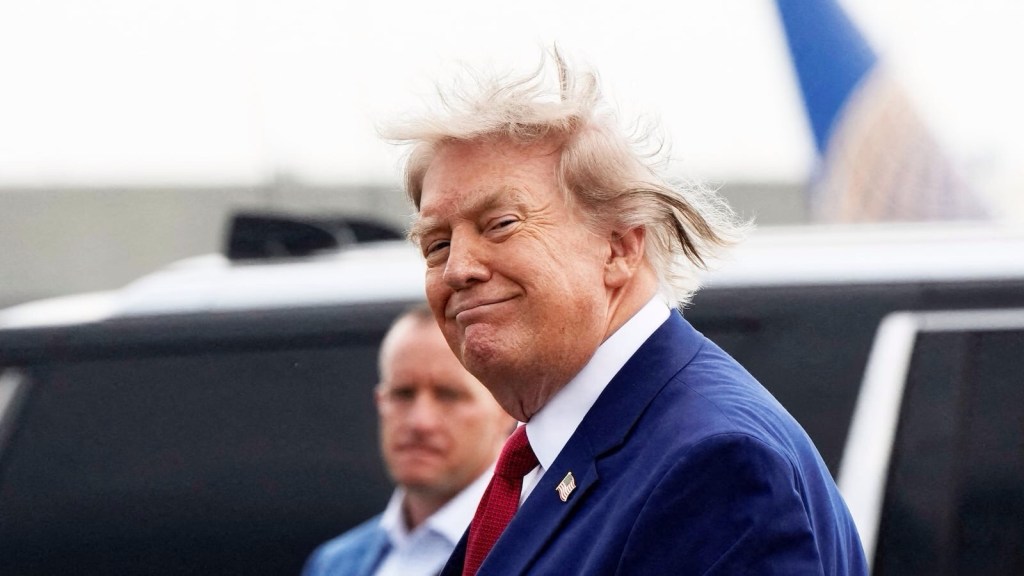
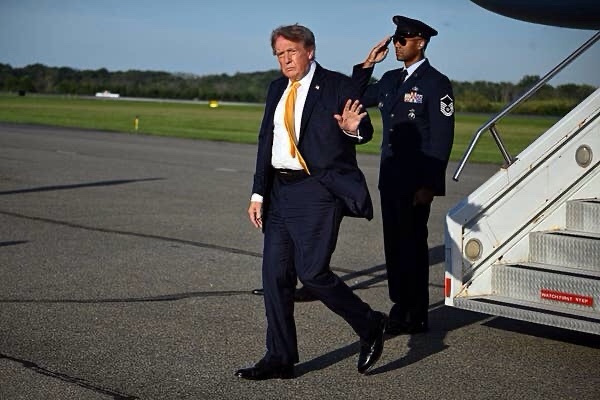
They say that imitation is the sincerest form of flattery. That being the case, Donald Trump must truly admire Vladimir Putin, considering the way he keeps bending over backwards to suck up to him.
His most recent impersonation of Putin was a comment he made during remarks in Florida yesterday while trying to convince the world that he has everything under control in Iran. Warning that people shouldn’t talk about the U.S. not winning the war with Iran despite his having notified Congress earlier that the hostilities have “terminated,” he said:
“We get the radical left to say, ‘We’re not winning, we’re not winning.’ They [Iran] don’t have any military left. It’s unbelievable. It’s actually, it’s actually, I believe it’s treasonous, okay. You want to know the truth — it’s treasonous.” [Kit Maher, CNN, May 1, 2026.]
Consider this:
> In 2022, following Russia’s invasion of Ukraine, Putin passed wartime censorship laws making it illegal to refer to the conflict as a “war” or “invasion,” instead labeling it a “special military operation.” (Trump himself has referred to his invasion of Iran as a “military operation,” denying that it is a war in order to avoid the necessity of seeking Congressional approval.)
> The Russian laws provide for a maximum penalty of 15 years’ imprisonment for spreading false information about the Russian armed forces. Even repeatedly “discrediting” the military — including through social media posts, public acts, or simply wearing blue and yellow clothing — can result in criminal charges and imprisonment.
> And as we all know, independent journalists and media outlets have been shut down en masse, with many being forced to flee the country.
If that all sounds too familiar, it should. JHearing Trump speak of “treason” in the context of individuals stating their opposition to his illegal, immoral, expensive, completely unnecessary war against Iran is like listening to Putin himself dictating the text of his newest edict as he proclaims imminent victory in Ukraine.
The echoes of their words — including the nearly identical verbiage — ring in my head like so many alarm bells. And I have a mental image of our Constitution being shredded into ever-smaller pieces.
For years, I’ve thought I was just too old to relate.
I am old enough to remember when TV was a modern miracle, and dial telephones replaced the ubiquitous operators (except for emergencies and information). I loved the new VCRs, and welcomed the advent of the cell phone — my first one weighed a ton, was as solid as a Sherman tank, and had a retractable antenna. Even the first desktop computers were great fun, and tremendous time-savers. I mastered them all.
When a cell phone was just a phone . . . and a load
But somewhere along the way, things seemed to get out of hand. Technology was no longer just about speed and convenience; the arrival of “smart” devices brought with them a loss of privacy, a feeling that too many people suddenly knew too much about us, and the knowledge that, once entered into a computer, your information could never be erased. The devices were getting smarter than we were.
And, like cars, the “smarter” the devices became, the more complicated the technology was. I used to be able to fix problems with my first IBM Model B electric typewriter, or check and add oil or water to my early automobiles. Today, I live in dread of touching the wrong icon on my phone; and I couldn’t find a dipstick under the hood of a new Chevy if you gave me a schematic of the engine. If they even have dipsticks anymore.
1960 Chevrolet Corvair
2026 Chevrolet Equinox
Then came something terrifyingly called “Artificial Intelligence.” And I knew immediately that the enemy had arrived. On the upside, I finally realized that I wasn’t too old to get it; the truth was that I had been smart enough to foresee it.
And my problem with AI isn’t just that it’s smarter and quicker than I am; I’m reasonably intelligent, but certainly not Mensa material. There’s always going to be someone smarter, and I’m okay with that. No, the real issue is the potential for misuse of AI by evil people . . . much like the invention of gunpowder some 12 centuries ago.
Then, as if I needed further proof, along came a story in yesterday’s media about the use of the latest technology by U.S. federal agents to track — not only criminals and illegal aliens — but everyday, law-abiding American citizens.
In January of this year, when ICE agents arrived in the State of Maine in search of illegals, a woman named Liz McLellan was one of many local residents who watched the events unfold. She took pictures of an arrest being made, then did something foolish: she followed a federal officer driving an unmarked vehicle to see where he was headed next. To her surprise, he led her directly to her own house, blocked her driveway, and — with other federal officers who arrived in separate vehicles — boxed her car in. One agent then ominously told her:
“This is a warning. We know you live right here.” [Shane Shifflett and Hannah Critchfield, Wall Street Journal, April 30, 2026.]
“We know you live right here.” (Photo by Liz McLellan)
How did the agent know who she was and where she lived? Simple. According to the Wall Street Journal’s findings, the U.S. government is currently spending hundreds of millions of dollars on technology that gives agents access to home and workplace addresses of American citizens, their social media accounts, vehicle information, flight history, law-enforcement records, and data to track their daily movements. [Id.]
Let that sink in.
When I first visited the Soviet Union as a tourist in 1988, it was assumed that our group — and all foreigners — would be under surveillance. Even later, when I was in Russia on business in the 1990s after the collapse of the Soviet Union, the KGB made no secret of the fact that they knew who and where I was. I was never threatened, but they made their presence felt.
I never expected that I might one day be subjected to the same sort of potential scrutiny by my own government in my own home.
Today’s “Big Brother”
According to the WSJ report, “The government’s tracking system relies on an amalgam of public and private information sifted, sorted and packaged by contractors that include Palantir Technologies, Deloitte, Japanese conglomerate NEC and smaller spyware specialists.
“The Department of Homeland Security has put these surveillance tools — facial-recognition software, location tracking and social-media scrapers once aimed largely at suspected terrorists and drug-traffickers — in the hands of federal immigration agents, who can identify, research and track virtually anyone by entering a name, license plate or by s imply taking a person’s photo.
“The government surveillance system has advanced since the 9/11 terrorist attacks with the aid of artificial intelligence and the linking of government records with far-reaching commercial databases. It has been used against people whom the government alleged opposed or obstructed the immigration crackdown.” [Id.]
*. *. *
The obvious first question is whether this is legal. There are pending law suits by individuals and civil liberties groups, attempting to establish that, indeed, it is not. (For further details, I highly recommend reading the entire WSJ article.) The government, of course, claims entitlement under the USA PATRIOT Act of 2001 and the Foreign Intelligence Surveillance Act (FISA) of 1978.
Poster by American Civil Liberties Union (ACLU) of Florida
But FISA only authorizes warrants for monitoring “agents of foreign powers” . . . although Section 702, which has just expired and is under Congressional consideration for reauthorization, does allow for warrantless collection of Americans’ communications when they interact with foreign targets. Luckily, that does not describe most of us.
The PATRIOT Act was signed into law in October of 2001 by then President George W. Bush following the 9/11 attacks, in order to strengthen national security and enhance information-sharing among law enforcement agencies to prevent terrorism. Unfortunately, some key provisions include expanding “roving wiretaps” and “sneak-and-peek” search warrants, raising concerns about citizens’ civil liberties.
So, while the courts try to untangle this very tangled web, the government continues on its merry search through our personal lives, using whatever information they may glean to root out and punish perceived “enemies” in our midst.
And no one — unless you live in a cave and have no electronic footprint whatsoever — is exempt.